The Tragic Loss of the Anas erraticus:
Wind Turbines Blamed for Devastating Protected Bird Population
By Staff Conservation Correspondent
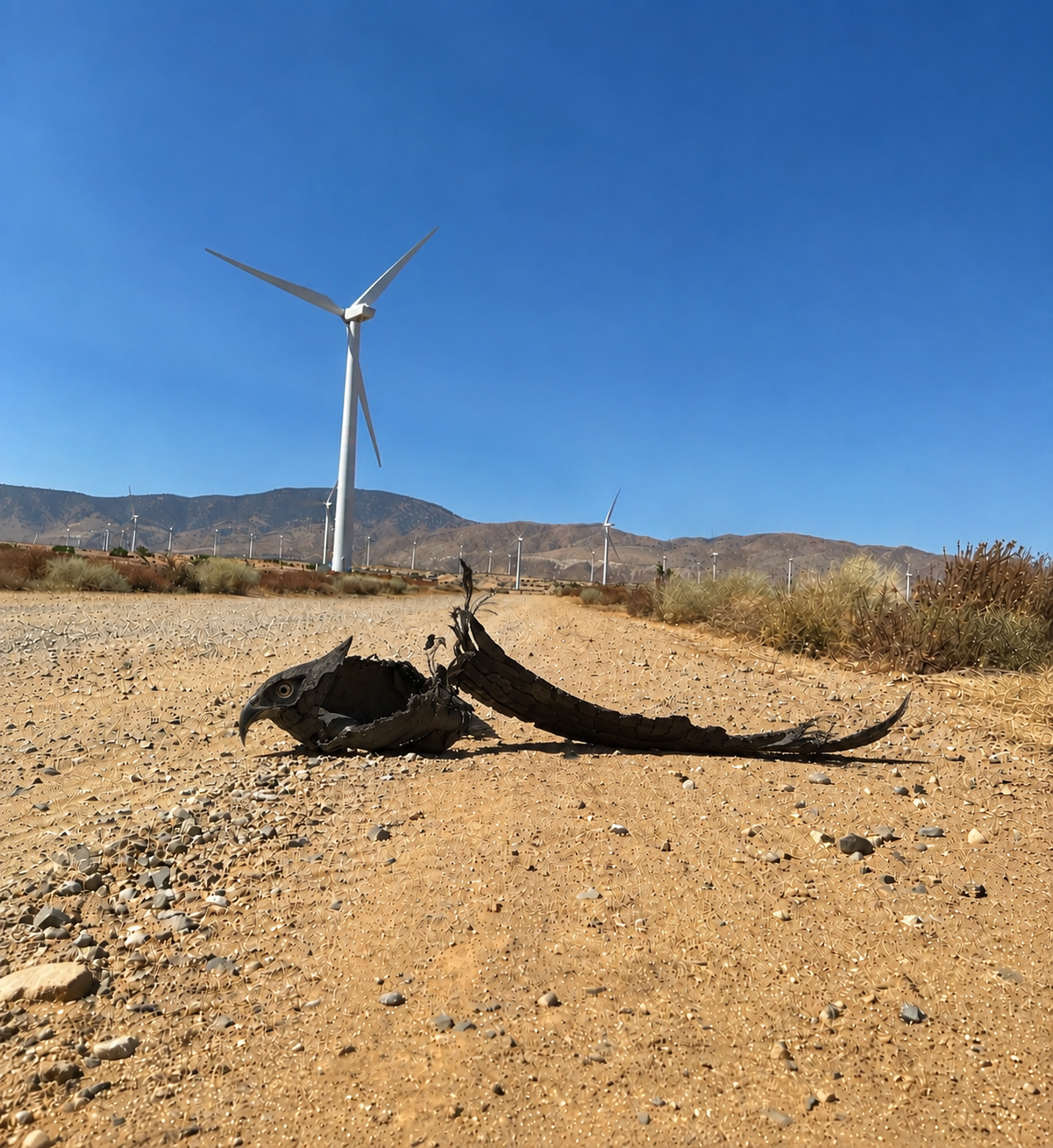
A disturbing discovery along a remote wind-energy corridor has conservationists asking difficult questions about the impact of renewable-energy infrastructure on one of the region’s most elusive protected species: the erratic duck (Anas erraticus).
The bird, believed to have been critically important to the local ecosystem, was found dead on a service road beneath a field of wind turbines. Preliminary observations suggest that the bird may have been killed after coming into contact with turbine infrastructure.
The Anas erraticus is an exceptionally rare species known for its unusual nesting behavior, including an apparent preference for inconvenient mechanical structures. According to wildlife observers, the birds frequently establish roosts around turbine blades and have occasionally been found nesting inside turbine transmission housings.
This behavior creates an obvious problem.
A deadly attraction
The turbines apparently provide the birds with several features they find irresistible: height, shelter, warmth, and extremely large rotating objects.
Birds reportedly roost on the blades at night, apparently unaware of the fundamental mechanical properties of wind turbines. When the blades begin turning, the results can be catastrophic.
Even more concerning are reports that birds have entered transmission housings through maintenance doors left open by technicians.
Once inside, the birds may construct nests around mechanical components, creating what experts describe as a “particularly poor choice of real estate.”
A maintenance worker who wished to remain anonymous described finding evidence of nesting activity inside a turbine housing.
“There was a nest in there. I don’t know what kind of bird it was, but it had apparently decided that the gearbox was a suitable nursery.”
Thousands allegedly killed every year
Conservation advocates estimate that thousands of Anas erraticus may be killed annually by turbine-related incidents, although comprehensive population data for the species remain difficult to obtain.
Researchers say the problem is compounded by the bird’s peculiar behavior.
Unlike ordinary birds, which might reasonably avoid enormous industrial machinery, A. erraticus appears to demonstrate an almost pathological attraction to dangerous mechanical equipment.
This has led some conservationists to call for improved turbine-door protocols, nest inspections, and specialized deterrent systems.
Why the bird matters
Despite its bizarre habits, the Anas erraticus reportedly plays a vital role in maintaining ecological balance.
The species is believed to contribute to insect regulation, seed dispersal, nutrient cycling, and the redistribution of small objects it apparently picks up for no identifiable reason.
Its disappearance could therefore have profound consequences for the surrounding ecosystem.
“People see a dead bird beside a turbine and think it’s just a bird,” said one fictional wildlife biologist. “But this is a protected species. It’s an ecological keystone. And frankly, it’s a tragedy.”
The investigation into the circumstances surrounding this particular bird’s death remains ongoing.
Meanwhile, conservationists are urging turbine operators to keep transmission doors closed, inspect machinery for unauthorized bird residences, and consider whether spinning enormous blades is compatible with the reproductive preferences of birds that insist on sleeping on them.
Editor’s note: The “Anas erraticus” and the ecological and mortality claims in this article are fictional. It is written as a satirical mock-conservation article based on the photograph, not as a factual report about a real protected species.